✦ ✦ ✦
You are cordially invited to the
Bharatanatyam Arangetram
of
You are cordially invited to the
of


Your RSVP has been received. We look forward to celebrating with you.
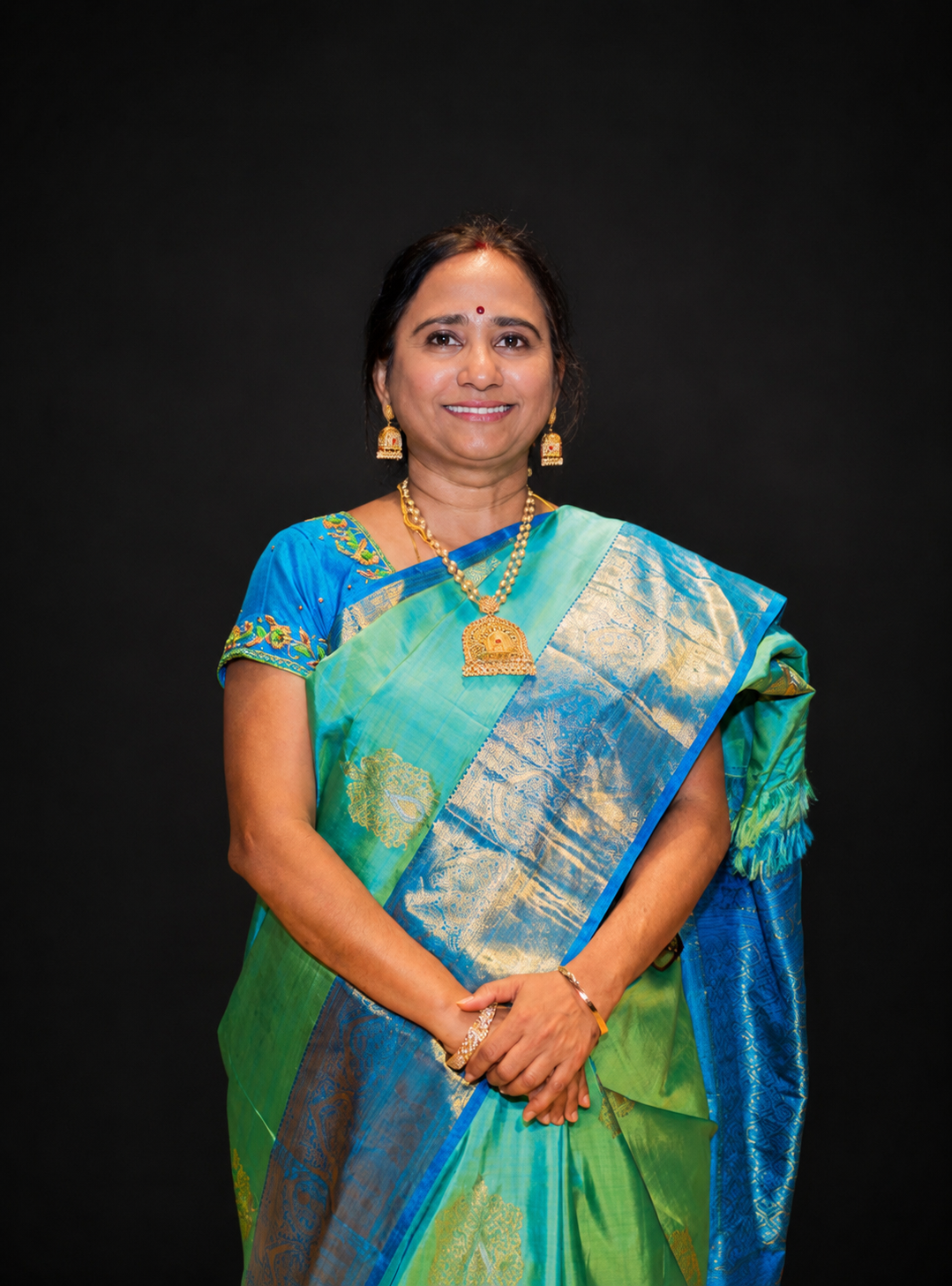
Guru Smt. Rajalakshmi Krishna is the Founder and Artistic Director of Shreebala Nrithyalaya, based in Frisco, TX, USA. Renowned for her innovative choreography rooted in the illustrious Vazhuvoor tradition of Bharatanatyam, she emphasizes the essential elements that shape refined and impactful Margam presentations. Under her expert guidance, her students have had the honor of performing on prestigious platforms across the United States and India, including during the celebrated Margazhi Festival in Chennai at renowned Sabhas such as Karthik Fine Arts, Mylapore Fine Arts Club, Brahma Gana Sabha, Parthasarathy Swami Sabha, and Anusham Fine Arts. Her disciples have also performed in revered temples including Chidambaram Nataraja Temple, Guruvayur Temple, Udupi Sri Krishna Temple, and Kollur Mookambika Temple, along with several prominent temples across Tamil Nadu.
Smt. Rajalakshmi Krishna began her Bharatanatyam journey under the tutelage of Kalaimamani Thanjai Arunachalam Jayalakshmi Arunachalam Pillai and completed her Arangetram in 1986. Following her Arangetram, she continued advanced training under her granduncle, Kalaimamani K. R. Radhakrishnan, thereby deepening her grounding in the authentic Vazhuvoor bani. Her performances have graced prestigious Sabhas and temples throughout India and the United States and have also been featured on Indian national television, reflecting her versatility, dedication, and commitment to preserving and promoting the classical arts.
Academically accomplished, Guru Smt. Rajalakshmi Krishna holds a Master's degree in Bharatanatyam, has successfully completed the Natya/Nattuvanga Visharada examinations with distinction, and is a Gold Medalist from Tamil Nadu Government Music College.
She has conceptualized and choreographed acclaimed dance productions such as Sakunthalam, Bhagavatham for Chinmaya Mission (1993), Arupadai Veedu and Meenakshi Kalyanam, which were widely appreciated for their artistic depth, traditional authenticity, and powerful storytelling, earning praise from renowned art magazines and cultural reviewers. Notably, the majority of her concerts and presentations are accompanied by a live orchestra, reflecting her unwavering commitment to preserving the grandeur, authenticity, and traditional essence of classical Bharatanatyam.
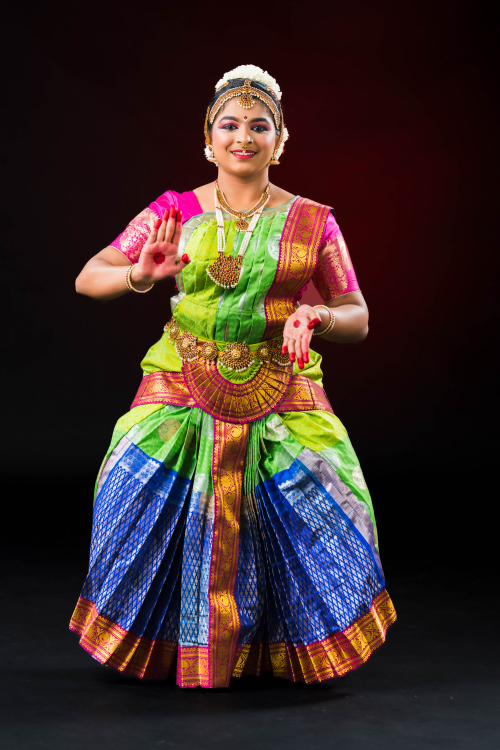
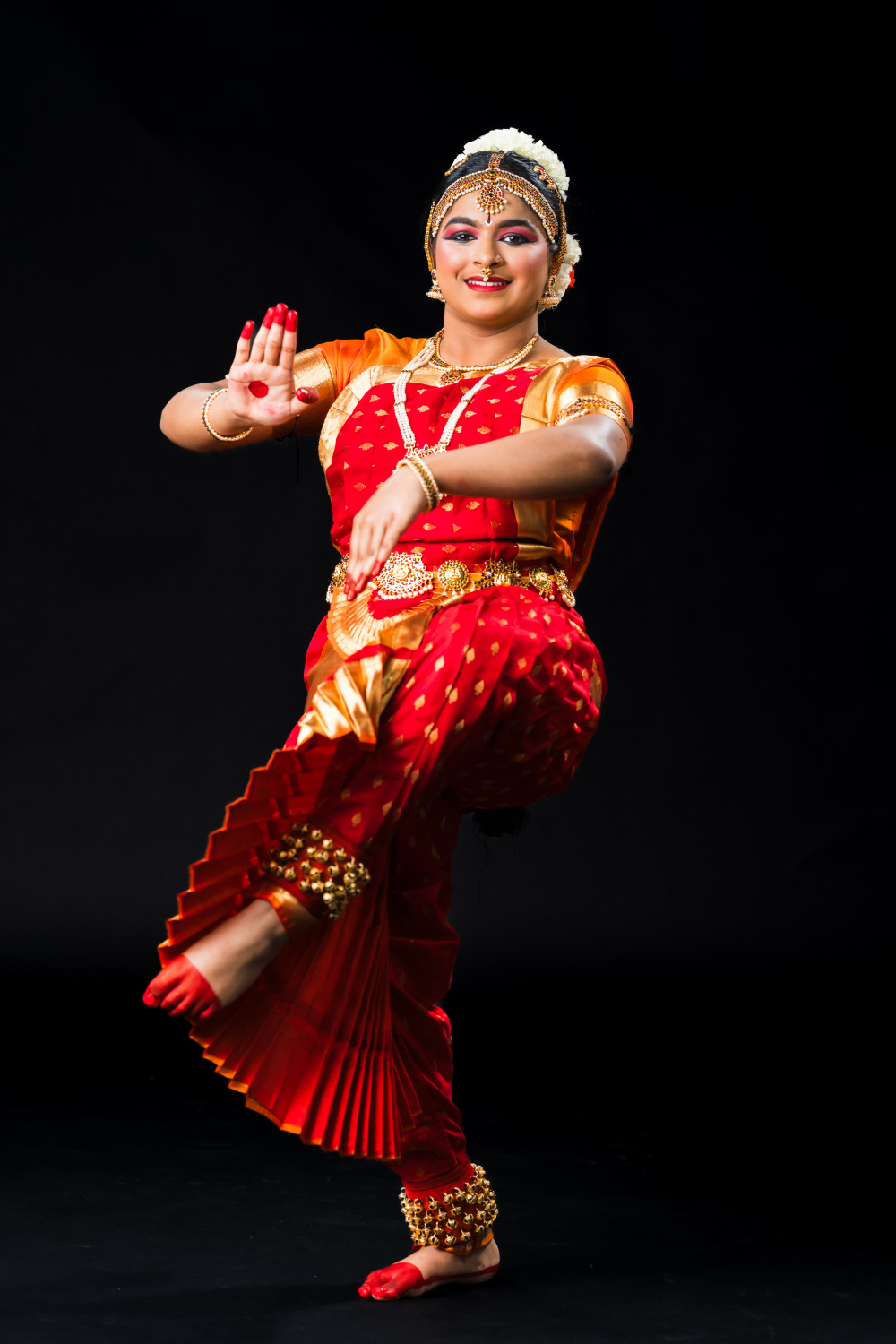
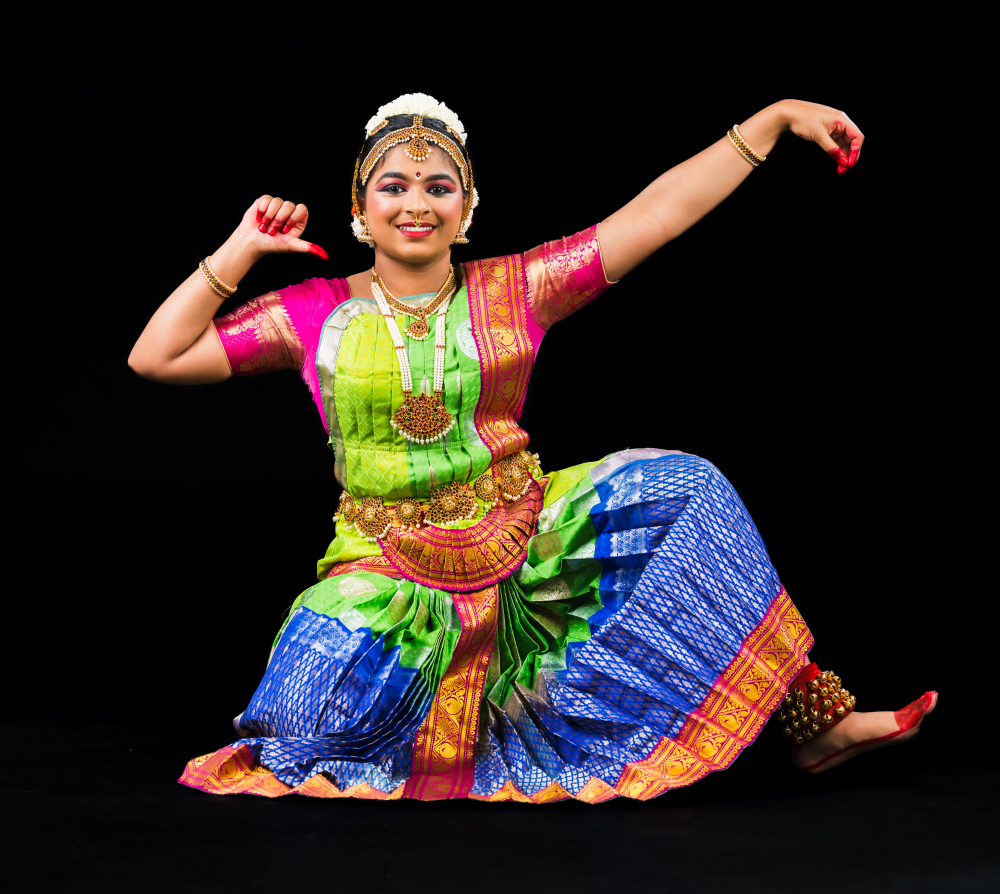
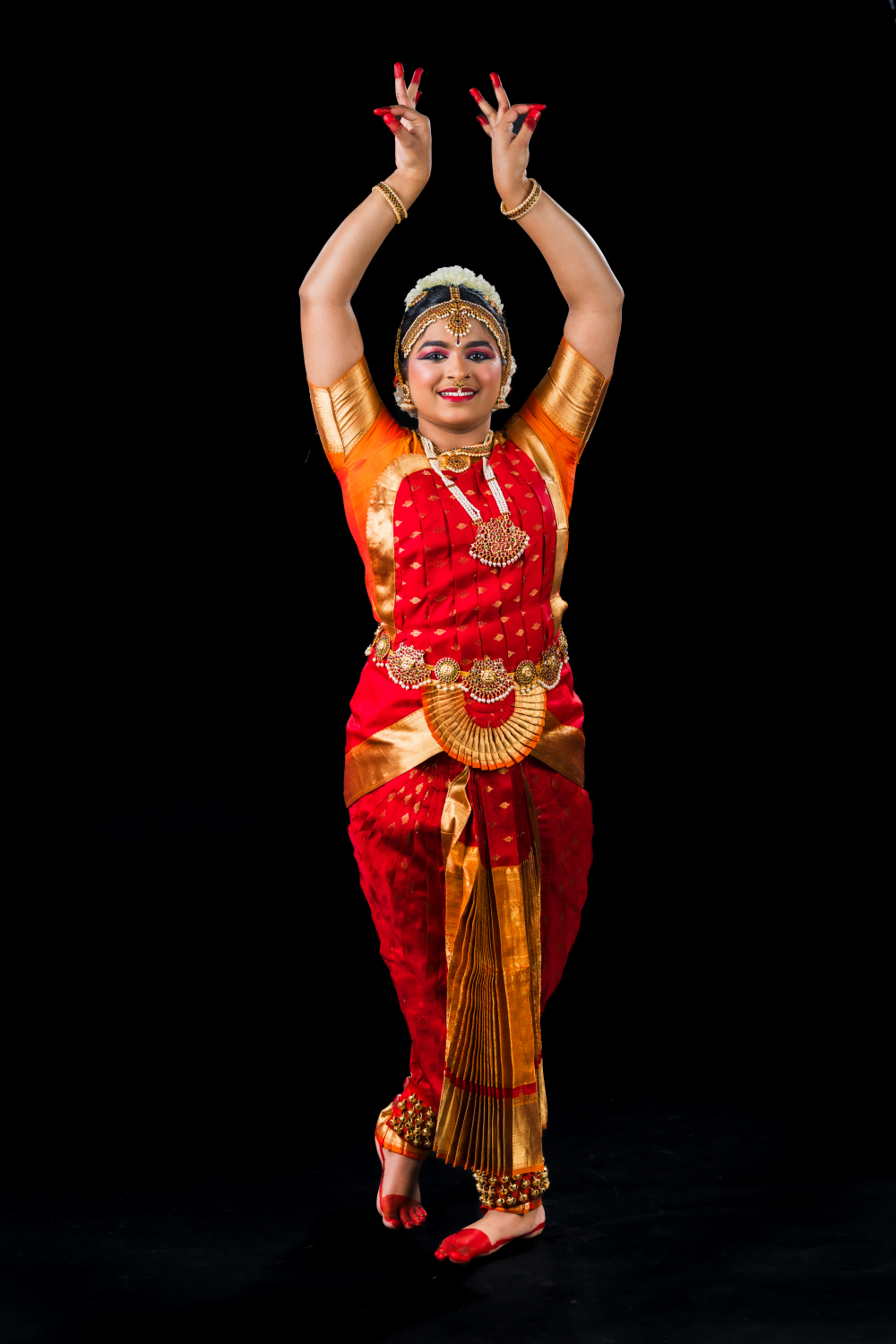
Abilaya Sakthivel has been learning Bharatanatyam from the age of 7 under the tutelage of Guru Smt. Rajalakshmi Krishna. Her love for the art has continuously grown and has been nurtured by her Guru. Over the years, she has performed this art in many temples in and around Dallas, Texas, USA.
Bharatanatyam helps Abilaya stay connected to the roots and cultural traditions. This arangetram is a great milestone for Abilaya and reflects years of training, hardwork, dedication and the blessings of her Guru. She hopes to continue learning Bharatanatyam even after her arangetram.
She plays the cello in school and also enjoys drawing and painting.
A Pushpanjali is the traditional, invocatory opening piece in a Bharatanatyam recital. The term literally translates to "offering of flowers". In this performance, the dancer presents flowers as a physical salutation to the deities, Mother Earth, the Guru, musicians, and the audience to seek their blessings before beginning the program.
Kali Koutuam is a vibrant, invocatory dance piece in Bharatanatyam dedicated to the Hindu Goddess Kali. A beautiful composition by Gangai Muthu Nattuvanar, this blends rhythmic syllables and expressive text to praise Kali's power and narrate her cosmic dance with Lord Shiva.
This padam is a deeply philosophical and soulful plea to Goddess Uma. It was composed in Tamil by the renowned Carnatic music legend Papanasam Sivan. Through the dance, the performer questions if they are merely a doll for the universe to play with, ultimately surrendering to the Goddess's lotus feet for compassion and protection.
This piece visually translates a scene of cosmic devotion and rhythm and was composed by the Travancore king Swathi Thirunal in Hindi. It portrays Lord Shiva (Shankara) as the supreme Lord of Dance (Nataraja) performing a splendid dance in the Chitra Sabha (the Hall of Art/Consciousness) and portrays rhythmic beats echoing from the ghungroo (anklets) and the damaru (drum).
Varnam serves as the centerpiece of a Margam. It heavily alternates between rhythmic footwork with swara patterns and abhinayam.
The varnam Nee Manamirangi vandarulvai was composed by Saint poetess Andavan Pichai. This composition stresses the 'Bhakti' (devotion). It beautifully explains the mythological feats of Muruga. The dancer depicts the marriage of Muruga with Valli and Deivanai, Muruga born from the fiery flames from the third eye of Lord Shiva after burning Manmadhan, wielding his divine spear (Vel) to destroy the arrogant demon Soorapadman and explains the meaning of Pranavamantram OM to his father.
It gives the dancer a vast canvas to portray diverse emotions: fear of the demon Soorapadman, awe of Shiva's third eye, joy in Muruga's beauty and the devotion.
This was composed by Kalki Krishnamurthi. In this piece, the dancer portrays Meera who reminisces Lord Krishna who grows up in Brindavan and recalls the story of the birth of Krishna and his playful childhood.
This was composed by Oothukkadu Venkata Subbaiyer. This kavadi chindu describes a scene in the forest of Vrindavan where Krishna plays the divine flute, the peacock, beetle and calf join Krishna's band and perform divine dance.
Thillana comprises of bodily movements and poses with intricate rhythmic patterns. The Brindavani Thillana, composed by the legendary Carnatic musician Dr. M. Balamuralikrishna, is a vibrant, fast-paced composition typically performed as the grand finale in a Bharatanatyam recital. This composition describes the beauty of Krishna and the devotee's joy with the sweet sound of his flute.
Mangalam means an auspicious ending. The dancer concludes expressing the gratitude and getting the blessings from god, guru, accompanying artists and the audiences.